Skip to content
Endoscopic Treatment for GERD

Procedure

Endoscopic Treatment for GERD

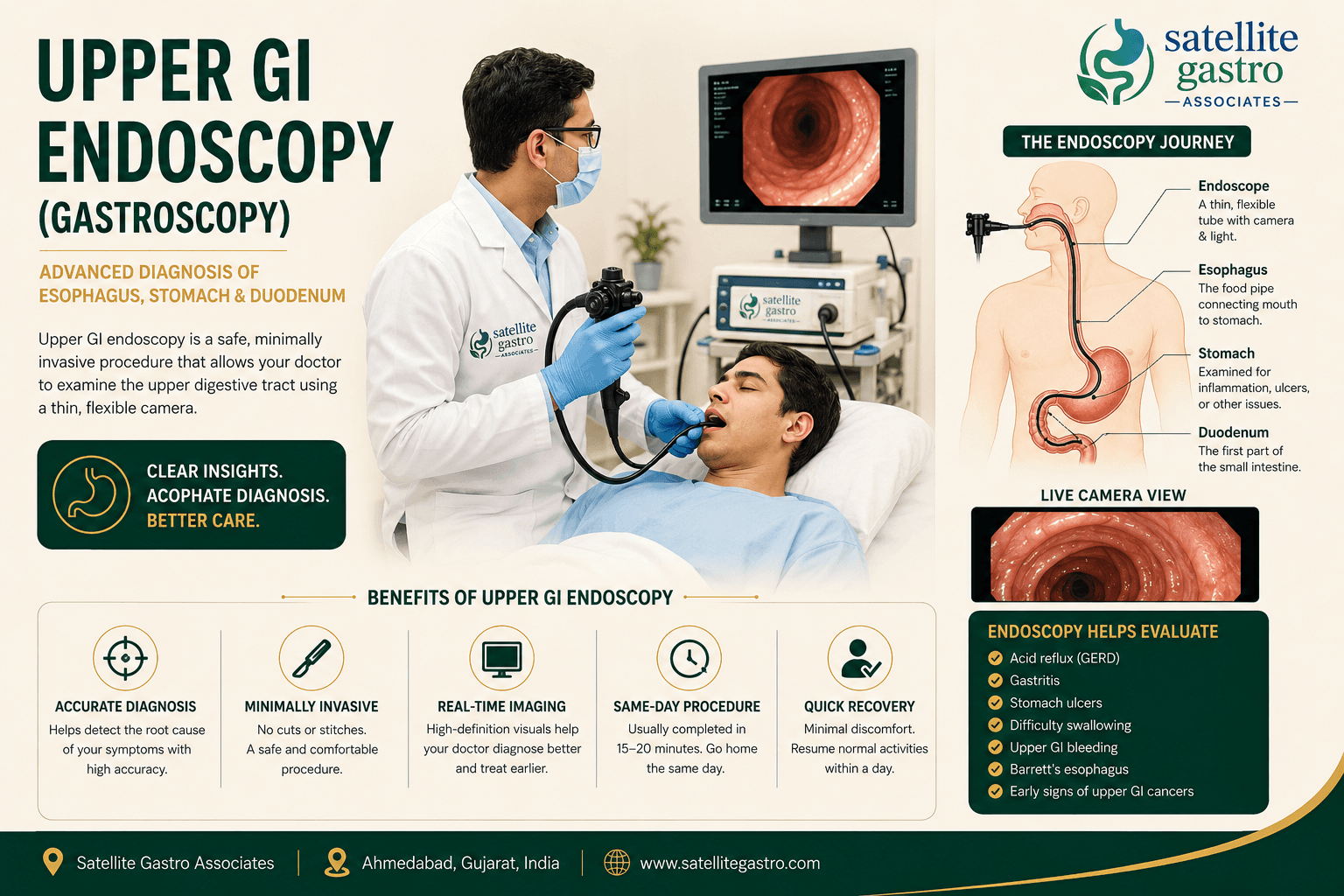
Endoscopic options for acid reflux and GERD that has not responded to medication, including endoscopic fundoplication and anti-reflux mucosal procedures (the GERD-X and ARMA family). Day-care procedures with no external incision.

What is it?

Some patients with reflux continue to have symptoms even on regular medication, or do not want to remain on long-term medication. For them, endoscopic anti-reflux procedures can re-tighten the valve between the food pipe and the stomach without an external cut.

Two broad approaches are used at the clinic. Endoscopic fundoplication uses sutures placed through the scope to reshape the upper stomach into a one-way valve. ARMA (anti-reflux mucosal ablation) and related GERD-X procedures use controlled treatment of the lining at the junction to tighten the valve mechanism.
Who needs it?

  • Reflux that is not controlled by acid-suppressing medication.
  • Reflux that returns whenever medication is stopped.
  • Patients who prefer not to take long-term acid-suppressing medication.
  • Patients who want a less invasive option than laparoscopic surgery.

How it works

Performed under sedation or short general anaesthesia.

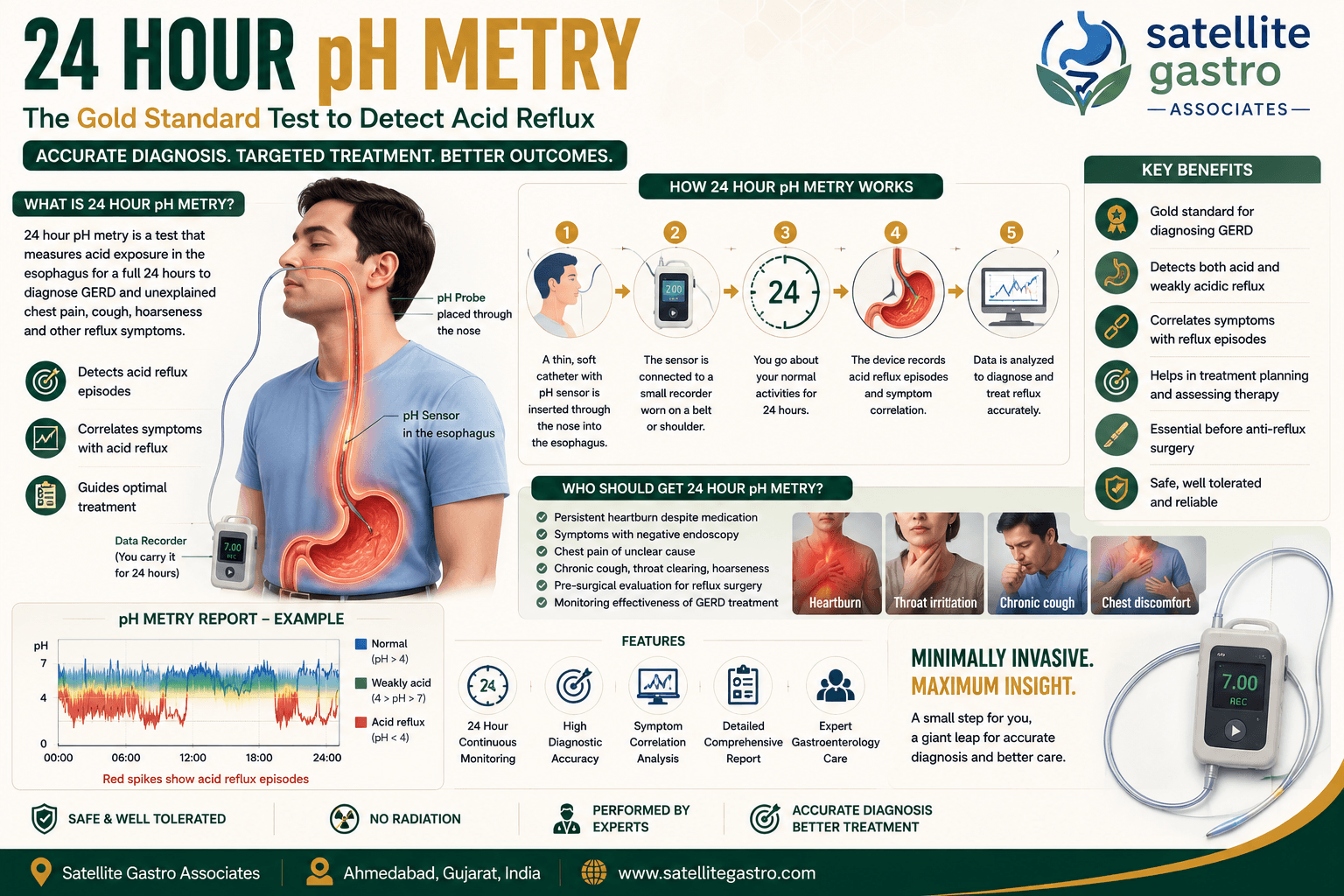
The endoscope is passed through the mouth. Depending on the technique chosen, sutures or controlled energy delivery is used at the junction between the food pipe and stomach.

The procedure usually takes 45 to 90 minutes. Most patients go home the same day or the next morning.

Preparation

  • No food for 6 hours before the procedure.
  • Standard pre-anaesthesia checks and blood work.

Recovery

  • Liquid to soft diet for several days, then gradual return to normal diet.
  • Mild chest discomfort and bloating for the first few days are common.
  • Most patients can return to office work within a week.

Risks

Bleeding, perforation and chest pain are recognised but uncommon. Some patients have mild swallowing difficulty in the first few weeks while the lining heals.

A small number of patients eventually need a repeat or alternative procedure.

Common questions

Things patients ask us.

Will I still need acid medication afterwards?

Many patients are able to reduce or stop their medication, but this depends on the individual response and is reviewed at follow-up.

Is this the same as fundoplication surgery?

It achieves the same goal, re-tightening the valve, but is done from inside through an endoscope with no external incision.