
Skip to content
Oesophageal and Anorectal Manometry

Procedure

Oesophageal and Anorectal Manometry

Manometry uses a thin pressure-sensing catheter to measure how the muscles of the food pipe or rectum contract. Essential for diagnosing achalasia and certain causes of constipation.

What is it?

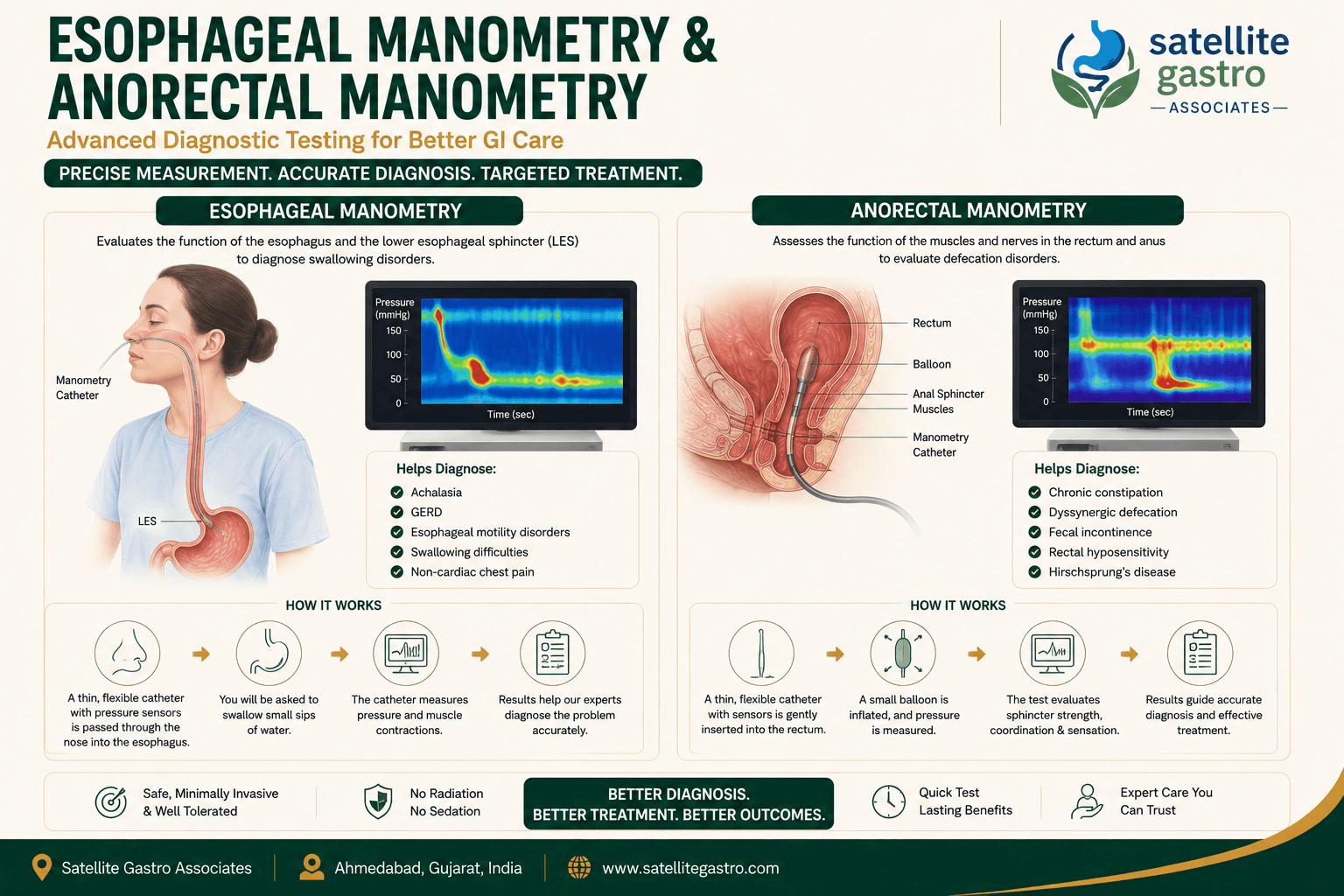
Manometry measures the pressure and coordination of the muscles in the food pipe (oesophageal manometry) or in the rectum and anal sphincter (anorectal manometry).

A soft catheter with many pressure sensors is gently passed in. As you swallow water or squeeze on cue, the catheter records how the muscles contract. The test is used to evaluate difficulty swallowing, suspected motility disorders such as achalasia, refractory acidity, chronic constipation and faecal incontinence.

Who needs it?

  • Difficulty swallowing or food sticking, when endoscopy is normal.
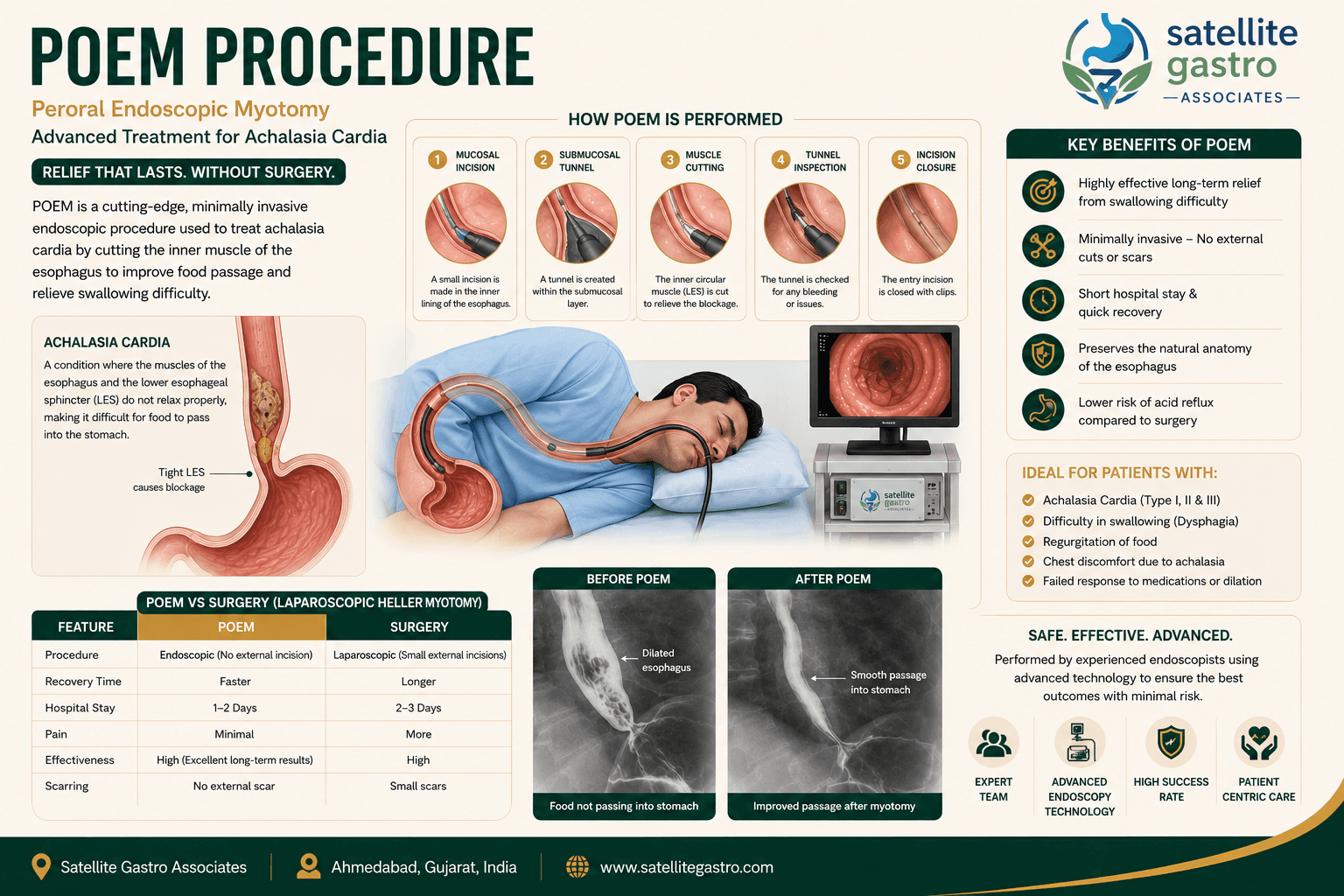
  • Suspected achalasia. Manometry is required before POEM.
  • Chronic constipation, especially with poor response to laxatives.
  • Faecal incontinence.

How it works

A thin catheter is passed through the nose and down the food pipe for oesophageal studies, or into the rectum for anorectal studies.

You will be asked to swallow water or squeeze on cue while pressures are recorded.

The test takes 20 to 30 minutes. No sedation is used.

Preparation

  • No food for 6 hours before.
  • Stop motility-affecting medicines for 48 hours, as advised.

Recovery

  • You can return to normal activity immediately.

Risks

Mild nose or throat discomfort during the test. No serious risks.

Common questions

Things patients ask us.

Is it uncomfortable?

There is mild discomfort while the catheter is being placed and during swallows. It is well tolerated.