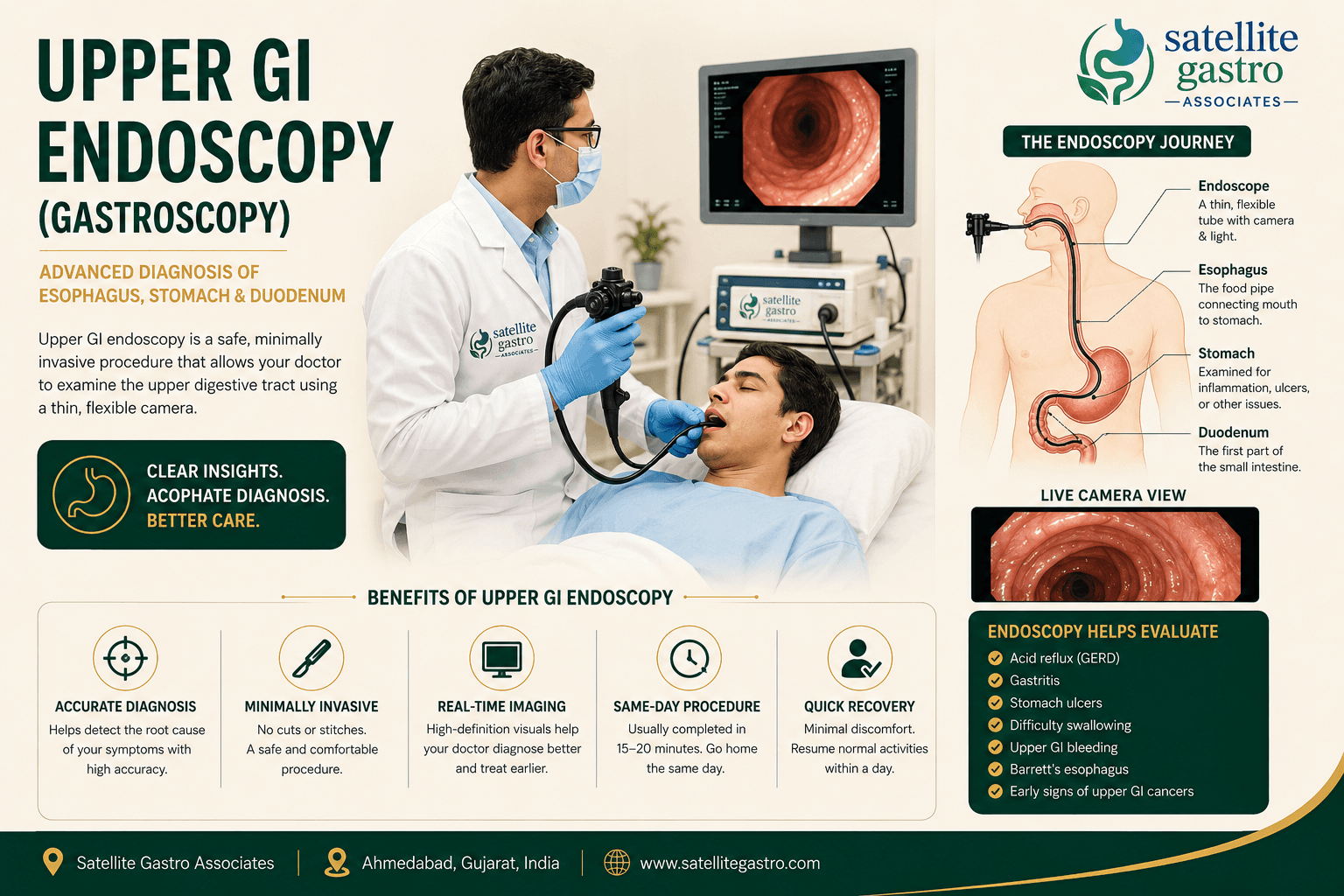
What is it?
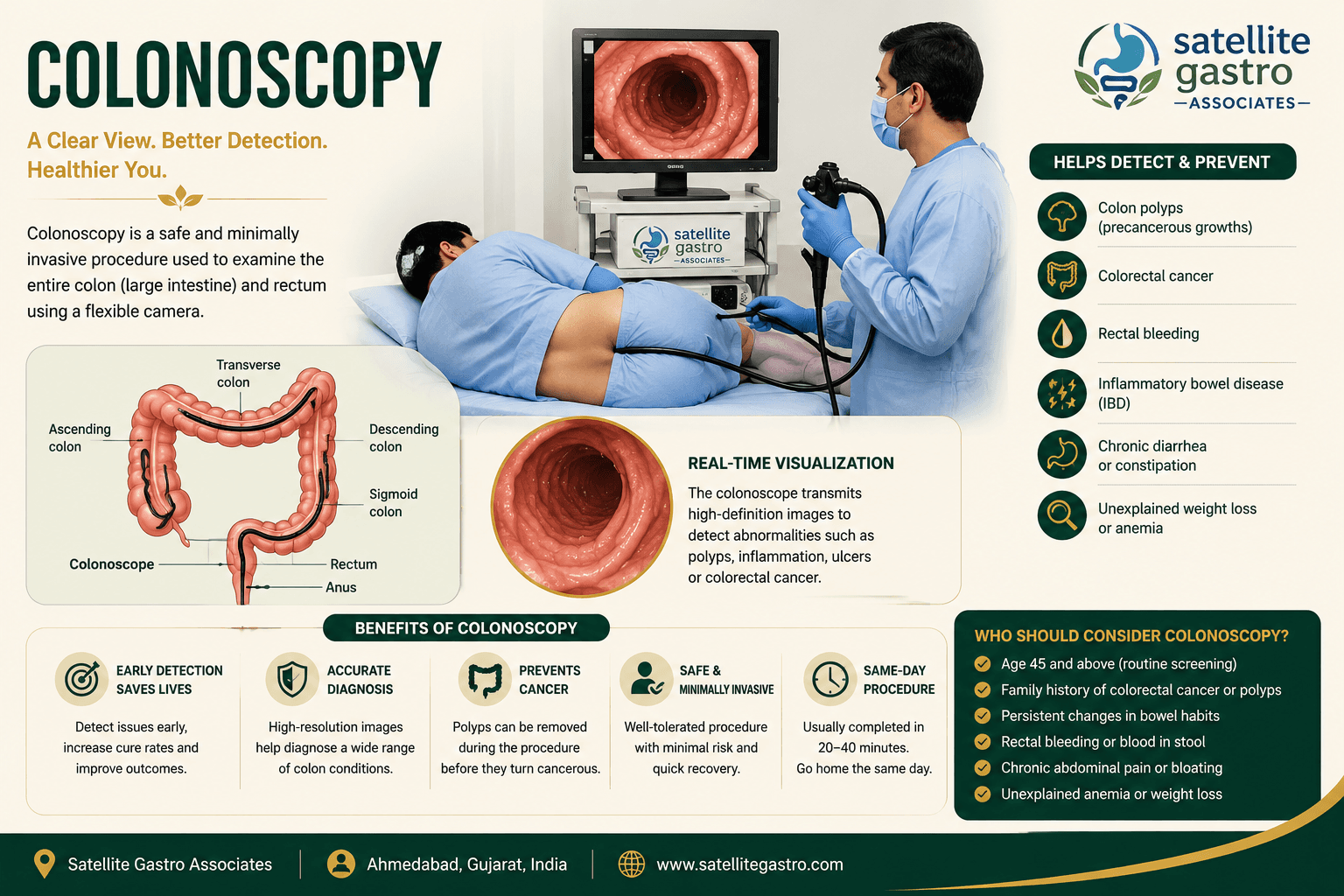
Colonoscopy is an examination of the entire large intestine using a flexible video scope inserted through the anus.
It is the single best test for finding and treating polyps early, before they have a chance to become cancer.
Procedure
Examination of the large intestine using a flexible scope. Recommended for unexplained bleeding, chronic diarrhoea, family history of colon cancer, or routine screening after age 45.
Colonoscopy is an examination of the entire large intestine using a flexible video scope inserted through the anus.
It is the single best test for finding and treating polyps early, before they have a chance to become cancer.
You will lie on your left side under sedation.
The scope is passed gently through the rectum and around the colon. The entire test usually takes 20 to 30 minutes.
If a polyp is found, it is usually removed in the same sitting using a small wire snare. The polyp is then sent for analysis.
All endoscopic procedures carry a small risk of bleeding, perforation, or reaction to sedation. These risks are uncommon when the procedure is done by a trained endoscopist in a hospital setting.
We will explain the risks specific to your case during the consultation, before you sign consent.
Common questions
How often should I get screened?
For average-risk adults, every 10 years from age 45. Sooner if a polyp is found or if you have a family history.
Is the bowel prep really necessary?
Yes. A poorly prepared colon means polyps and cancers can be missed.
Related procedures
Conditions we treat with this